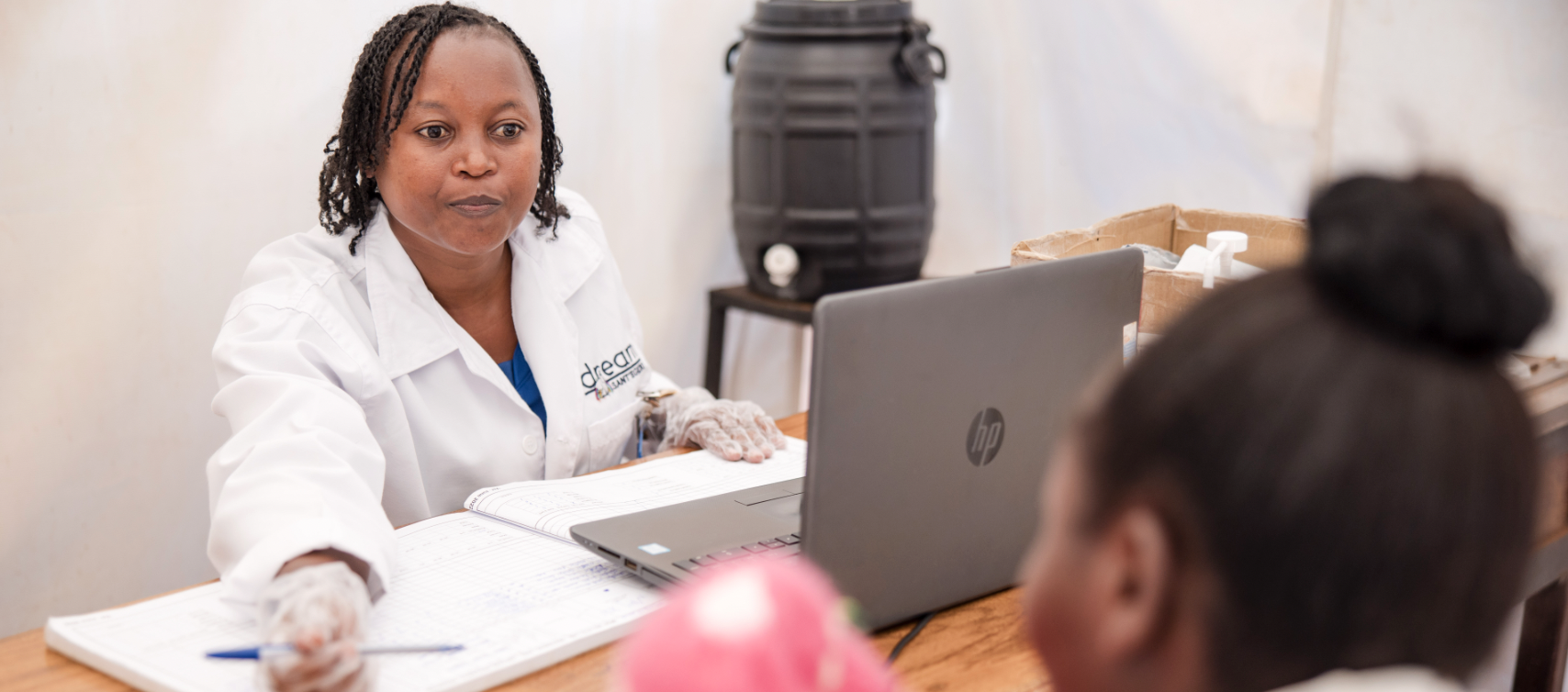
World AIDS Day, DREAM Sant’Egidio: African youth increasingly at risk
On the occasion of World AIDS Day, the DREAM program reaffirms its commitment to providing free, high-quality health services in 10 African countries.
In a year marked by a severe crisis in international HIV funding, World AIDS Day strongly reminds us of the need to safeguard the progress achieved so far. The theme chosen by UNAIDS — “Overcoming disruption, transforming the AIDS response” — calls on the world to renew efforts and support the most fragile countries in order to keep the global goal of ending AIDS by 2030 within reach.
For 23 years, the DREAM program of the Community of Sant’Egidio has been active in 10 African countries, responding every day to the healthcare needs of young people. Nearly 6,000 adolescents (ages 15–24) are currently receiving treatment in the program’s health centers: half of them in Mozambique, over 1,000 in Malawi, and the rest spread across the other countries where DREAM operates. This is a generation often raised amid stigma, poverty, isolation, and limited access to healthcare — a generation that needs sustained support and guidance.
“For DREAM, investing in the prevention and treatment of young people means nurturing a healthy generation that represents the future of African countries,” says Paola Germano, the program’s director. For this reason, DREAM has long worked with an integrated model that supports adolescents not only clinically but also in their growth: youth groups where experiences and support are shared, psychosocial counseling, regular screening, and health and life-skills education. These are young people who, thanks to the care they receive, return to school, regain confidence, and become role models for their peers — ambassadors against discrimination within their communities.
In Guinea Conakry, Mozambique, and Malawi, the DREAM program of the Community of Sant’Egidio has significantly expanded its presence thanks to the support of the Ministry of Foreign Affairs and International Cooperation, ensuring free and high-quality care. In these countries, two projects funded by the Italian Agency for Development Cooperation — EQuAS and Not Too Late — have been launched to strengthen the response among adolescents and young adults, reaching thousands with innovative, youth-centered strategies.
In Mozambique, the EQuAS project operates in seven health centers across Maputo, Beira, and Quelimane. Here the commitment to adolescents translates into ongoing activities: 7,841 HIV tests performed among 15–24-year-olds in the first 16 months, far beyond the initial target; hundreds of young people engaged in awareness events featuring music, sports, and testimonies; teen clubs, meetings for young men, activities supporting girls’ school attendance; 55 young women trained through professional courses that boost autonomy and awareness; support groups for those struggling with treatment adherence. In the centers involved in the project, the percentage of young people achieving viral suppression now exceeds 90% — a remarkable result in a country where the epidemic remains among the most severe in sub-Saharan Africa.
In Malawi, where HIV disproportionately affects adolescent girls and young women, the Not Too Late project brings health services closer to youth in the districts of Blantyre and Balaka. DREAM works to reach young people before they arrive late to diagnosis, when treatment is less effective and the risk of other severe infections increases. Activities include mobile services in rural communities, youth-focused days in health centers, support groups for adolescents in care, and interventions in schools and informal youth spaces. The aim is to ensure early diagnosis, strengthen adherence, and reduce the number of young people arriving at health centers with advanced disease.
In both countries, DREAM’s response demonstrates that a people-centered strategy — especially one focused on young people — can offset the challenges of fragile health systems. It is a response rooted in listening, proximity, and a daily presence in neighborhoods, schools, and communities.